Candid Health Raises $120M to Automate Revenue Cycle Management


Candid Health has raised $120 million in Series D funding, led by Sixth Street Growth with participation from existing investors including Oak HC/FT, 8VC and Y Combinator.
Automation in RCM has been promised for years, but never truly delivered upon before Candid. The legacy RCM software vendors most people use were built 20+ years ago, at a time when billers manually processed claims. Today, those systems still work fundamentally the same way: human teams fix claims one at a time, and innovation means fancier ways to sort the work queues.
Candid is truly automating RCM, and we’re doing it from the ground up. We view RCM as fundamentally a data engineering problem, and like many problems we solved at Palantir, if you solve the underlying data engineering part well, you are able to automate the end-to-end workflow to an unprecedented extent. Our platforms entirely replace, or sit on top of, legacy RCM software, and automate medical billing processes that continue to be predominantly manual.
Over 200 customers use our autonomous revenue cycle management platform to collect the revenue they've earned without the manual work that has defined RCM for decades. Our customers include digital health startups, large, national management services organizations (MSOs), and electronic medical records, and we process about $7 billion in claim volume each year.

The Core Challenge
RCM is more complicated than it has ever been. Provider groups have never been larger, and there are more insurance companies with more rules on how to submit claims than ever. These rules change constantly, and have only become more complicated to manage. All of this presents extremely painful administrative challenges and costs.
At the same time, incumbent billing software can’t keep up with the complexity. Providers can’t edit rules or other types of automation themselves. They rely on submitting tickets to the RCM vendor that take 3-6 months to implement. These systems were built when fee-for-service was the only type of insurance contract, so they can’t handle value-based contracts, for example. In the most extreme cases, provider groups are so large that they are on multiple instances of their RCM software because the software can’t handle the data scale.
Providers are at the intersection of these two tensions. The result is a David vs. Goliath problem in RCM: the sheer scale and complexity of modern billing against infrastructure that was never built for such challenges.
How We Built Candid
From day one, Candid’s North star has been to submit claims correctly the first time, with no manual intervention.
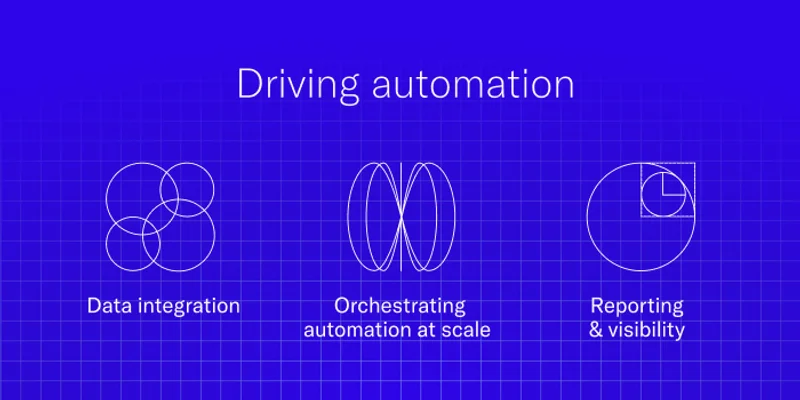
Doug and I worked together at Palantir for more than five years on the leading edge of data engineering and automation. One of our key learnings was that automation is the tip of a deep iceberg. To achieve true automation, you need to invest heavily in the underlying data engineering. At the end of the day, automation is only as accurate as the data made available to it, whether that automation is AI or something else. To do that, we needed to be extraordinarily good at three things:
- Data integration
- Automation orchestration
- Reporting and visibility
Together, these three pillars create a cycle: better reporting surfaces better data, better data feeds better automation, and better automation drives better results.
Data Integration
We had to reimagine the RCM data model layer and store what other billing systems don't — things like contracts, credentialing, service facilities, and fee schedules. While deeply critical when you’re trying to submit claims correctly the first time, this data is often unavailable in the RCM platform and typically lives in spreadsheets or other, disconnected systems. We model that data in an ontology, and then make it available to the automation technologies we deploy, like AI. Importantly, this architecture enables us to flexibly extend the data model to accommodate new data assets required to automate RCM across different medical specialties, like drug cabinet reconciliation in oncology.
To get this data in the first place, we’ve invested heavily in making data integration seamless and comprehensive. The platform ingests data in any format, including flat files, raw EDI files like 837s, and via API. We're EMR-agnostic, and therefore able to work with all EMRs — in several cases, integrating data from multiple, different EMRs into a single, consolidated billing layer.
Orchestrating Automation at Scale
Once we have all of the data, the principle challenge becomes orchestrating all of the automation in a seamless, observable way. We deploy several forms of automation, including AI agents, deterministic rules, and machine learning models, all coexisting in the same platform. A single, touchless claim can have deterministic rules applied, run through a machine learning model to predict if the claim will be denied, and be managed by several AI agents, all in a single claim submission journey. Unlike some incumbent systems, our automation applies changes to claims, instead of routing claims to users to fix manually. In the most complicated cases, a billing team may still need to be involved to process a claim manually. We’ve solved for this automation to elegantly work alongside users in a visible, observable way.
Today, we’re running over 41,000 rules an hour. In some cases, rules are applied deterministically by the platform upon claim submission. In other cases, rules are applied by AI agents. In both cases, we’ve invested heavily to solve the challenge of rules at scale:
- Rules are editable and versioned, making it easy to update rules safely and easy to rollback. Without this, providers lose track of who implemented rules, and when they were rolled out.
- Rules are testable, making it easier to introduce new rules safely, which customers need to do all the time in order to accommodate payer changes. Without this, new rules are introduced into the system with unforeseen impact downstream and potentially cause more problems.
- Every edit applied by a rule, whether applied via AI agent or deterministically, is tracked in the system and made available to the user in the audit logs, dramatically simplifying troubleshooting.
Additionally, Candid is constantly reverse-engineering new payer rules and deploying them to our customers to help them effortlessly stay on top of nascent rule changes and updates.
Real-time Reporting and Visibility
We go deep on reporting because billing requires constant attention. Payers change their rules. Contracts change. What worked yesterday may not work today. We’re big believers in the saying, “if you can’t measure it, you can’t fix it.”
We ship out-of-the-box with several reports detailing the entire RCM continuum, from topline KPIs down to concrete lists of claims requiring action. Everything is filterable, in real-time, and configurable. RCM is a constant investigation, and teams need the ability to sift through mass amounts of data quickly to identify problem trends so they can introduce fixes upstream as quickly as possible.
We also enable our customers to export clean, comprehensive RCM data out of Candid and into other systems. This is critical, as our customers rely on us to provide them with the data they need to efficiently run business processes, like month end close and accounting workflows.

How Customers Streamline RCM with Candid
Talkiatry, the nation's leading provider of in-network psychiatric care, operates across all 50 states and contracts with hundreds of insurers. Since partnering with Candid, they have reduced manual billing work by 40% while increasing claim volume, achieving a 98.3% payer net collection rate with an initial denial rate of just 3.3%.
Nourish, the telehealth nutrition platform, replaced manual claim reviews with Candid's Rules Engine. Today, Nourish has a 96.7% touchless claim rate.
Tia is a women's healthcare company that integrates primary care, gynecology, mental health, and wellness. With Candid, Tia has scaled to a payer net collection rate above 95% and fewer than 20 days to payment on average. Even as Tia 5x'd its business, the company’s administrative burden decreased.
We also partner with some of the country's largest managed service organizations to deploy Candid's platform across their affiliated practices nationwide.
The Future of Autonomous RCM
Every year, healthcare providers spend $280 billion on RCM. Most of that work is still manual. It doesn't have to be.
We're building Candid to be the autonomous RCM platform that powers the next generation of healthcare providers. If you've earned the revenue, you should be able to collect it — without scaling headcount, and without settling for systems that create more work than they eliminate.
We see a future where no billing team member touches a claim unless the work is strategic. No fixing credentialing errors. No chasing missing modifiers. Candid handles it all. Human judgment goes where it matters: complex cases, payer negotiations, financial strategy. That judgement can then be encoded in the system, creating more leverage and scale for skilled human operators.
That future is not theoretical. Our customers already process the majority of their claims without a single manual touch. This funding round is how we make that the industry standard.
We'd love for you to join us — as a team member, a partner, or a customer.
Book a demo today.